

The Call
📬 Issue #6 — When the times come and the time comes…

Stage: The Stirring
💌 Intro Letter
Dear Soul Rider,
There’s a moment when the noise of the world no longer drowns out the whisper inside you.
A moment when the script you’ve been following feels too small for the story you were born to live.
That’s what I call The Call.
In the classic Hero’s Journey structure (Joseph Campbell’s monomyth), The Call is essentially the second stage, right after the “Ordinary World.”
It doesn’t always arrive with trumpets or clarity.
Sometimes it’s a quiet unrest, a longing, a restlessness that feels like hunger for something you can’t name.
But once you’ve heard it, or felt it; you can’t unhear it.
This issue is about that threshold.
The point where the familiar feels too tight and the unknown feels inevitable.
It’s about the people answering their call, whether by leaving old towers or building new campfires.
And it’s about us, here, saying yes to the work of becoming.
In our manifesto, we say:
"I write to awaken the sacred, stir desire, and elevate the everyday. My voice is a bridge between soul and success, roots and wings."
Answering The Call is how we keep that promise.
Not in theory, but in practice.
By stepping away when the old stories no longer fit.
By building spaces where souls gather and rise.
We have no purpose here without you, Soul Rider.
Let’s answer together…
With Soul and fire,
— Terod Naej
The Call is not a sound, it’s a signal. You’ve already felt it, otherwise you wouldn’t be reading this. Subscribe, and let’s answer it together—word by word, step by step, soul to soul.
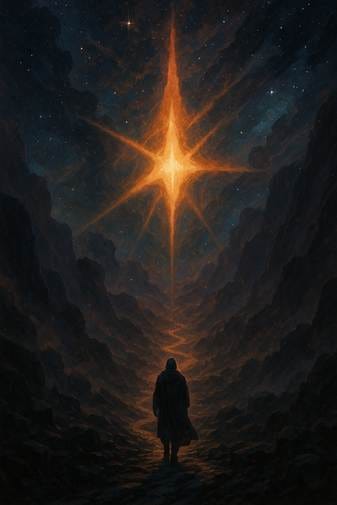
🎤 Poetic Piece — When the Time Comes, We Won’t Just Hear — We’ll Burn
When time comes knockin’, it don’t yell—
it moves in quiet, deep as hell.
It’s not a shout, it’s just a feel
like something real you can’t un-feel.
Time shows up soft, inside the ache,
in all the moves we didn’t make.
It ain’t a flash, it ain’t a fight;
it’s that long stare late in the night.
Time slips in songs we can’t forget,
in books we read and still don’t get.
Time's in the burn we try to hide,
the dream that knocks, but we denied.
Every time we say "I’m fine,"
time’s just watchin’, waitin’ in line.
The call don’t come like people think,
it ain’t a sign, it’s more a link.
It’s in that shift, that pull inside,
that gut-feel vibe you can’t outride.
Time breaks the shell we built so strong,
then shows us where we do belong.
Sometimes it comes through pain and tears,
but still, it brings us back our years.
And when it hits, we can’t ignore
it cracks us open to the core.
So when your time taps on your chest,
don’t chase the noise… just feel what’s left.
Not every fire comes to burn;
some come to teach, some come to turn.
From who you were, to who you are…
From hiding small, to burning star.
📓 Journal Reflection — Standing at the Threshold
It doesn't always start with a bang.
Sometimes, The Call is quiet.
Not an alarm. Not a prophecy.
Just a pause in your soul that won’t let go.
You feel it when you're scrolling past chaos and feel both helpless and haunted.
You feel it when someone says, "That's just the way it is,"
and something inside you whispers:
But what if it’s not?
The truth is, the world is on fire.
And not every fire destroys. Some fires invite. Some burn illusions.
Some are calls to become.
Right now, our communities are hurting.
Violence. Silence. Systemic lies. Spiritual drought.
And you, yes, you… ‘might be the one carrying the ember
that lights a way forward.
So what do we do with this feeling?
We turn to The Call: your five-point compass for becoming:
🪧 1. Rattle the System
When injustice feels normal, your art can make it feel unbearable.
You don’t need to change the world overnight.
Just tell the truth that no one else will.
Even a whisper in the right direction can shake a giant.
“Speak not to please, but to wake.”
🗣️ 2. Give Voice to the Silenced
Maybe your gift isn’t just for you.
Maybe your story is the bridge someone else has been waiting for.
Your experience, raw, real, rooted, is someone else’s survival guide.
Use your pen like a megaphone.
“Write what they told you to forget.”
✨ 3. Worldbuild Deep Truths
We don’t just need facts. We need futures.
Your imagination is resistance.
Build a world where dignity wins.
And even if it’s fiction; make it feel truer than the news.
“The world you write might be the one we walk toward.”
🌱 4. Leave Legacy, Craft Mastery
Don't rush. Refine.
Your call might be to write the book that outlives the noise.
To become so excellent, you make mediocrity impossible.
Craft like your soul depends on it, because it does.
“You’re not just building content. You’re building sacred architecture.”
🧠 5. Explore the Soul & Condition
The world will forget to feel.
You don’t have to.
Write what hurts. Write what heals.
Put your questions on the page.
Not to answer them, but to keep them alive.
“We become human by holding space for what we don’t understand.”
🎧 LISTEN WHILE YOU REFLECT
Soundtrack: The Stirring Playlist 🎵
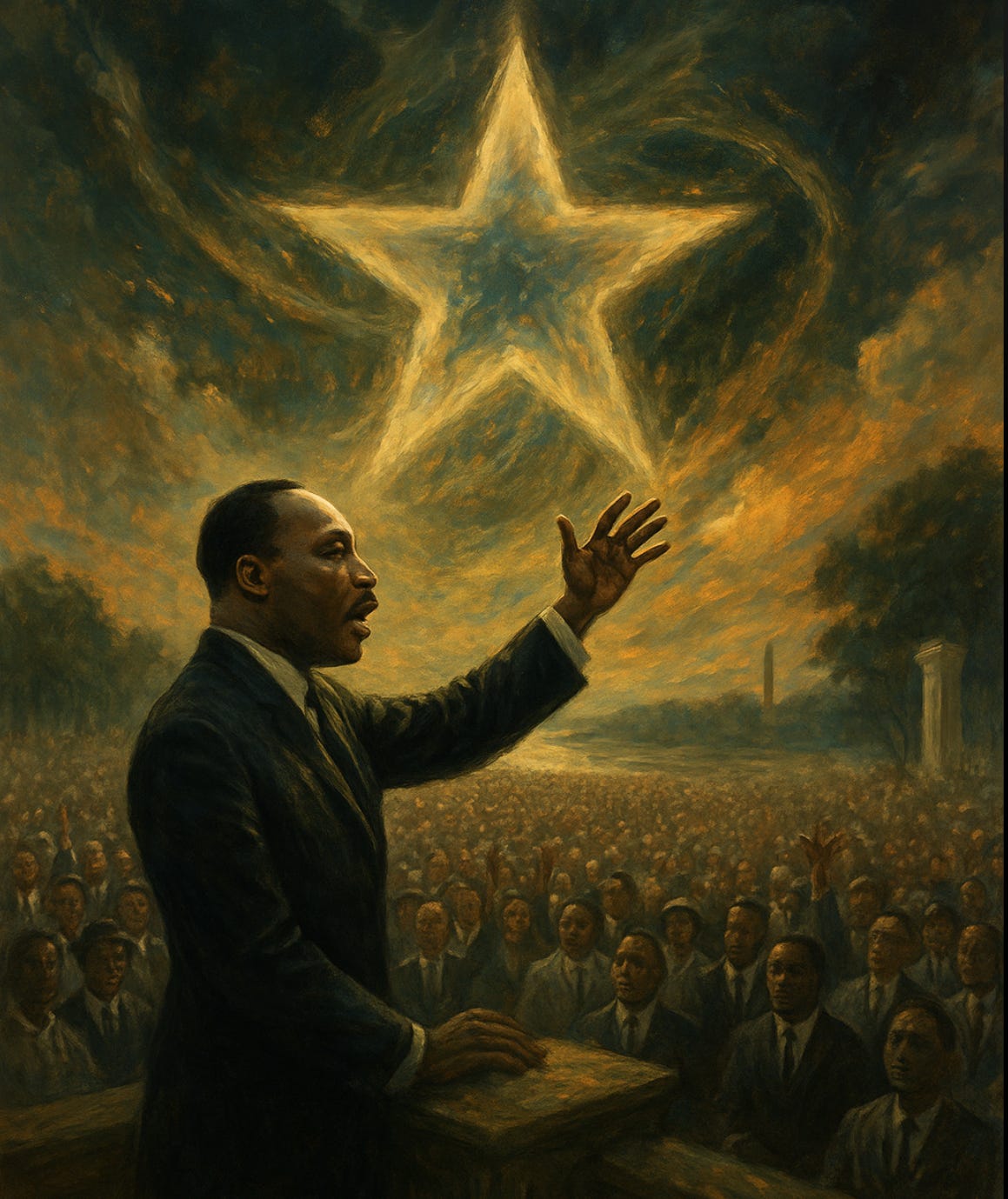
🌍 “The Call” That Shaped History: 5 Iconic Figures Who Heard and Answered
Throughout history, there have been moments when individuals felt a profound, often inexplicable inner pull: a call to action, purpose, or transformation. Whether rooted in spiritual revelation, a sense of justice, or a dream too big to ignore, this “Call” became the turning point that shaped not only their own lives but the fate of nations, cultures, and movements.
Below are some of the legendary figures who experienced this phenomenon. Their stories remind us that “The Call” is not a fantasy, it is real, recurring, and available to those who are ready to listen.
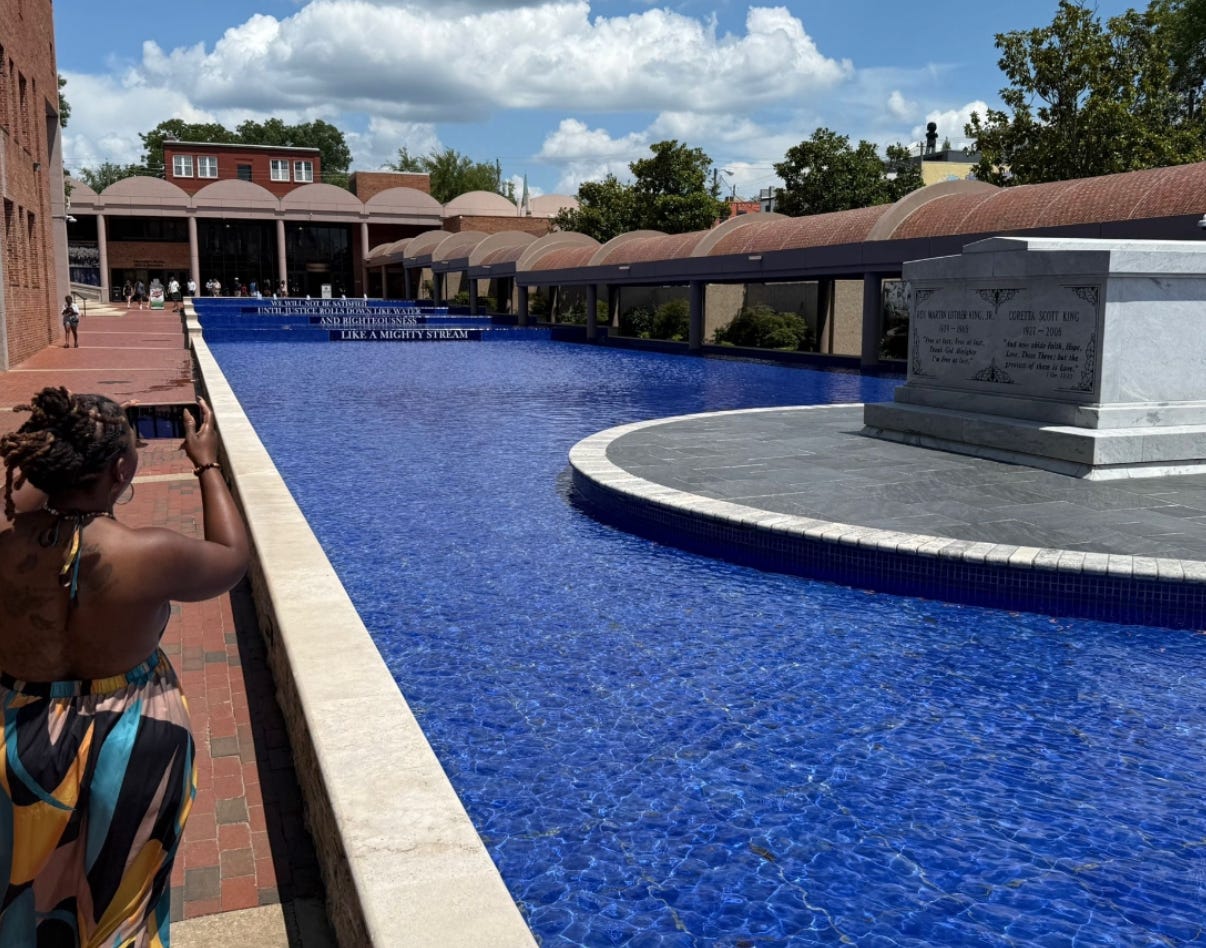
Martin Luther King Jr.
In December 1955, a seamstress named Rosa Parks refused to give up her seat on a Montgomery bus. Her quiet act of defiance was not just an act of resistance; it was a signal flare.
The arrest that followed lit the fuse of the Montgomery Bus Boycott, and in the midst of the urgency, local leaders sought someone to guide the movement.
They turned to a 26-year-old pastor, Martin Luther King Jr.
For King, The Call wasn’t just political—it was spiritual and moral.
It demanded more than strategy; it demanded conviction. He stood before crowded churches and weary citizens, not to promise an easy road, but to bind their struggle to something higher: the belief that justice was not just a legal matter, but a divine one.
He spoke of love in the face of hate.
Of nonviolence in the face of brutality.
Of a dream in the face of decades of nightmares.
This call didn’t let him go.
From Montgomery to Selma to Washington D.C., King carried it in his voice, his pen, and his presence, until his life was taken in 1968.
But the echo of that call still moves through history.
It reminds us that sometimes leadership isn’t sought; it’s answered.
And that the most powerful calls are those that rise from the union of moral courage and collective hope.
Joan of Arc (1412–1431): The Divine Call of Liberation
At just 13 years old, a peasant girl from Domrémy, France, claimed she began hearing the voices of saints: Michael, Catherine, and Margaret, urging her to save France from English domination during the Hundred Years' War.
Her Call: A sacred mission to lead France to victory, despite her gender, youth, and lack of military training.
Impact: Joan persuaded Charles VII to let her lead the French army. She inspired troops and led them to key victories, including lifting the siege of Orléans. Her execution at 19 made her a martyr, and she was later canonized as a saint in 1920.
Frederick Douglass (1818–1895): The Call of Freedom and Voice
Born into slavery in Maryland, Douglass secretly learned to read and write, a crime for someone of his status. The moment he physically resisted a brutal slave master marked his awakening.
His Call: To become a voice for the voiceless and expose the cruelty of slavery to the world.
Impact: After escaping bondage, Douglass became a towering abolitionist, author, and statesman. His autobiography Narrative of the Life of Frederick Douglass shook the conscience of America and remains one of the most powerful testimonies of human dignity.
Mahatma Gandhi (1869–1948): The Call of Nonviolent Resistance
Gandhi’s call came not in India, but in South Africa, when he was thrown off a train in 1893 for being a person of color sitting in a “whites only” compartment.
His Call: To challenge injustice through nonviolent civil disobedience rooted in spiritual and moral conviction.
Impact: Gandhi returned to India and led a nonviolent revolution that ended over 200 years of British rule. His philosophy inspired global movements for civil rights and liberation, influencing figures like Martin Luther King Jr. and Nelson Mandela.
Harriet Tubman (c.1822–1913): The Call to Deliver Others to Freedom
Born into slavery, Tubman escaped in 1849. But freedom wasn’t enough; she felt a divine calling to return and rescue others.
Her Call: Guided by visions and faith, Tubman risked her life again and again, becoming the “Moses” of her people.
Impact: She led over 70 slaves to freedom via the Underground Railroad and later became a spy, nurse, and activist during the Civil War. She also fought for women’s suffrage until her death.
Nelson Mandela (1918–2013): The Call of Reconciliation Over Revenge
Mandela's political awakening began as a student, but the deeper call came during his 27 years in prison. There, he transformed anger into vision.
His Call: To lead South Africa out of apartheid; not through retaliation, but through forgiveness and unity.
Impact: Upon his release, he became South Africa’s first Black president and an international symbol of resilience, peace, and moral leadership. His decision to forgive his oppressors inspired a wounded nation toward healing.
+ More Notable Mentions:
Mother Teresa (1910–1997): Heard "a call within the call" while on a train in 1946—to leave her convent and live among the poor in Calcutta.
Malcolm X (1925–1965): Found his call while in prison, converting to Islam and rising as one of the most influential voices in the Black liberation movement.
Siddhartha Gautama (The Buddha, c. 563–483 BCE): Left his palace upon encountering sickness, aging, and death—his call to seek enlightenment and end suffering.
Why "The Call" Still Matters Today
From Moses to Toussaint Louverture and all the above, through Jesus The Christ; each of these individuals responded to something deeply internal yet often disruptive, an urging that required sacrifice, courage, and often isolation. What they discovered on the other side was not fame, but alignment with purpose.
They teach us that The Call doesn’t require perfection; only willingness. It often comes when least expected, and it usually demands that we go beyond comfort.
“The glow of a star is just the mirror of a million sparks believing they matter.”
So, listen closely.
Your Call might not be thunder, but a whisper that insists: "There is more."
These aren’t just stories from the past.
They are living echoes of what’s possible
when a single soul says yes to something greater.
When Joan heard the saints,
when Mandela chose forgiveness over vengeance,
when Tubman returned again and again into darkness with nothing but faith,
they were answering a Call that burns in all of us.
Maybe yours isn’t to lead nations.
Maybe it’s to heal one heart,
to build one haven,
to say one brave truth in a world drowning in noise.
Whatever it is—You matter.
And your Call matters.
Because we have no purpose here without you, Soul Rider.
Your spark completes the constellation.
Your journey fuels the next chapter.
Your voice, even trembling, still shakes mountains.
So when the whisper comes—
or the storm—
don’t run from it.
Run toward it.

📰 The Call to Step Away: Why Voices Are Leaving the Old Towers
In the halls of legacy media, the lights are still on—but for many voices, the spark is gone.
Some leave not because they were silenced—though some were—but because The Call grew louder than the paycheck.
Katie Couric. Jennifer Rubin. Oliver Darcy.
All trading security for sovereignty, prestige for presence.
They’ve left polished desks for blank pages.
Editors’ notes for readers’ letters.
Sometimes The Call isn’t to run toward something new,
but to walk away from what no longer feels alive.
Here, The Call isn’t about breaking news first—
it’s about owning your voice, unfiltered,
and serving the people who need it most.
Not a funnel. Not a brand.
A dojo.
If you feel it too, step closer.
The page is waiting: ( AP News)
📰 The Call to Build: How the Creator-Led Economy is Changing Everything
While most scroll past the noise, a quiet revolution is happening.
Not in boardrooms. Not in broadcast towers.
But in late-night writing sessions, home studios, and kitchen tables… ugh nvm!
It’s the rise of the creator-led economy,
where platforms like Substack and Patreon give us what old systems never could:
ownership of our work, our audience, and our income.
This isn’t just money-making.
It’s culture-making.
Every subscription is a vote for independent voices.
Every comment, a piece of scaffolding.
Every share, a ripple that reaches farther than we can see.
The Call here is to stop waiting for permission—
and start building the spaces we wish existed.
The 20th century belonged to broadcast towers.
The 21st belongs to campfires…
smaller, warmer, human spaces where connection is the currency and creation is leadership.
here: (From Axios Media Trends)
📜Quote of the week:
"There are two important days in your life: the day you are born and the day you find out why."
— Mark Twain
Takeaway:
The first day gives you existence; the second gives you direction. The Call is that second day; whether it comes as a sudden lightning bolt or a slow dawn, it marks the moment when life stops being something that happens to you and becomes something you consciously live.
Answering it is the difference between drifting and navigating… no, Soul riding!
We don’t follow The Call alone. We gather around campfires, we build dojos, we lift each other higher. Share and Subscribe today and… add your spark to the fire. There’s a place waiting for you here.
🔚 CLOSING WORDS
Here’s the thing:
Not all storms come to destroy.
Some come to clear the path.
If you’re feeling lost right now,
maybe you’re just being summoned.
Not to a destination.
But to yourself.
This isn’t the end of the world.
It’s the end of pretending you’re not powerful.
So next time the silence feels heavy,
say thank you.
It might be time.
📌 Next Issue: The Refusal — All the Ways I Tried to Avoid Myself
Until then,
Answer boldly. Or whisper back. But answer.
The world is waiting on your yes.
In fire and in flow,
—Terod Naej
Every day you wait is a day the story stays untold. The Call doesn’t repeat itself forever. Join the Soul Riders, and start building the life—and the community—you can’t stop thinking about.

Powerful imagery, Terod! 🔥 There's something so profound about "The Call" - that moment when we feel the divine stirring within us, urging us toward our true purpose. Love how you're exploring these deep spiritual themes through your inner journal. That light breaking through the darkness is such a perfect metaphor for awakening. 🙏✨
HI , i write late-night reflections for introverts and deep thinkers - slowly building a tribe of midnight wanderers ✨
https://open.substack.com/pub/peacefulaurora/p/mind-night-blog-the-three-deaths?utm_source=share&utm_medium=android&r=602dk6